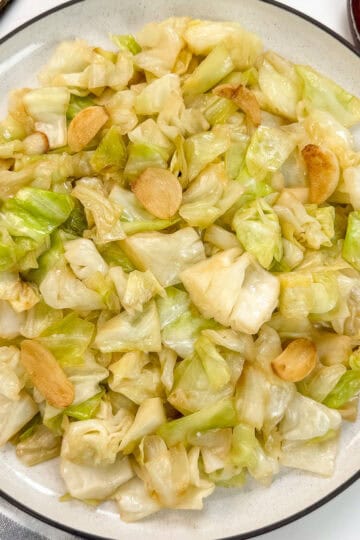
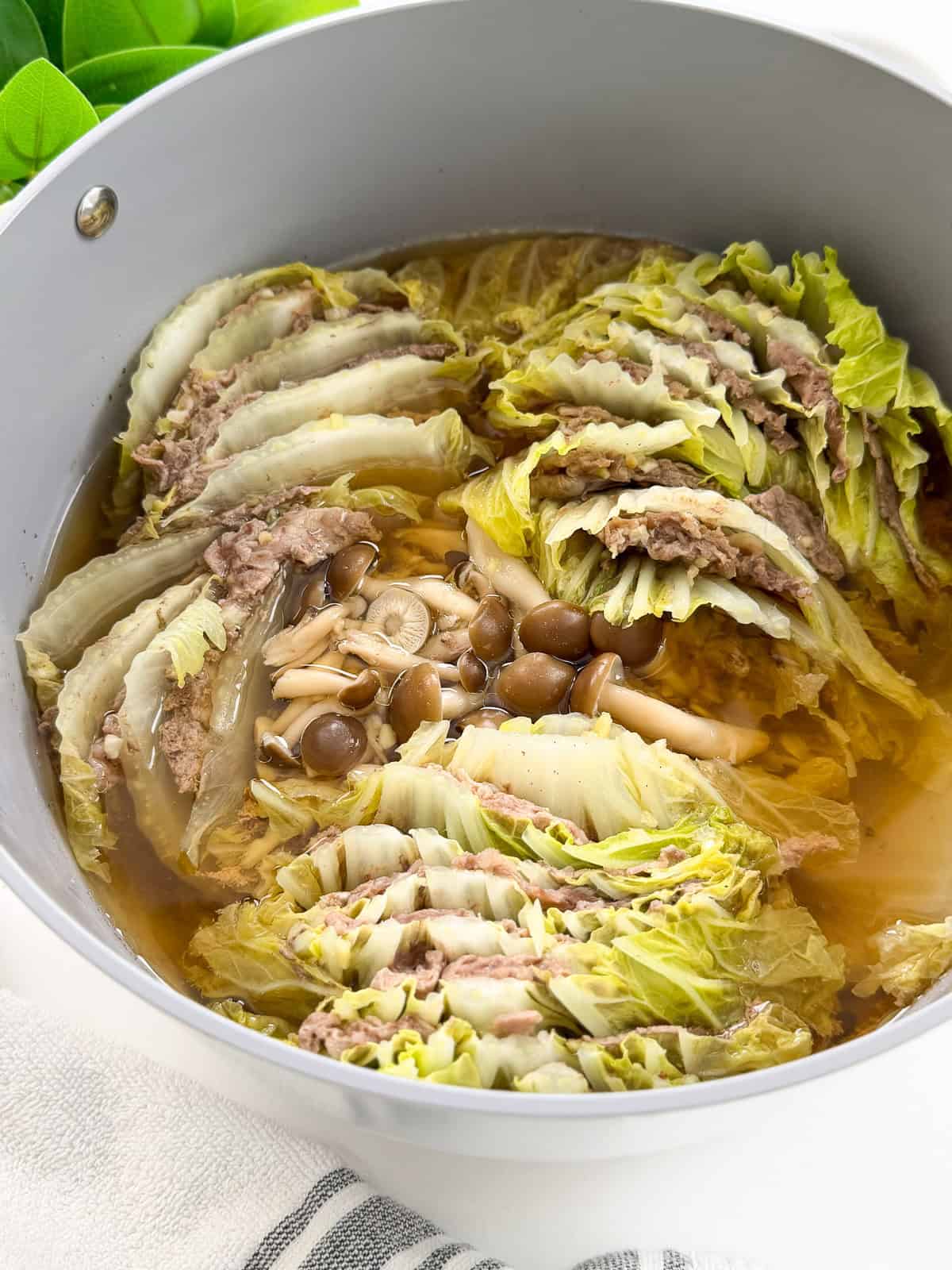
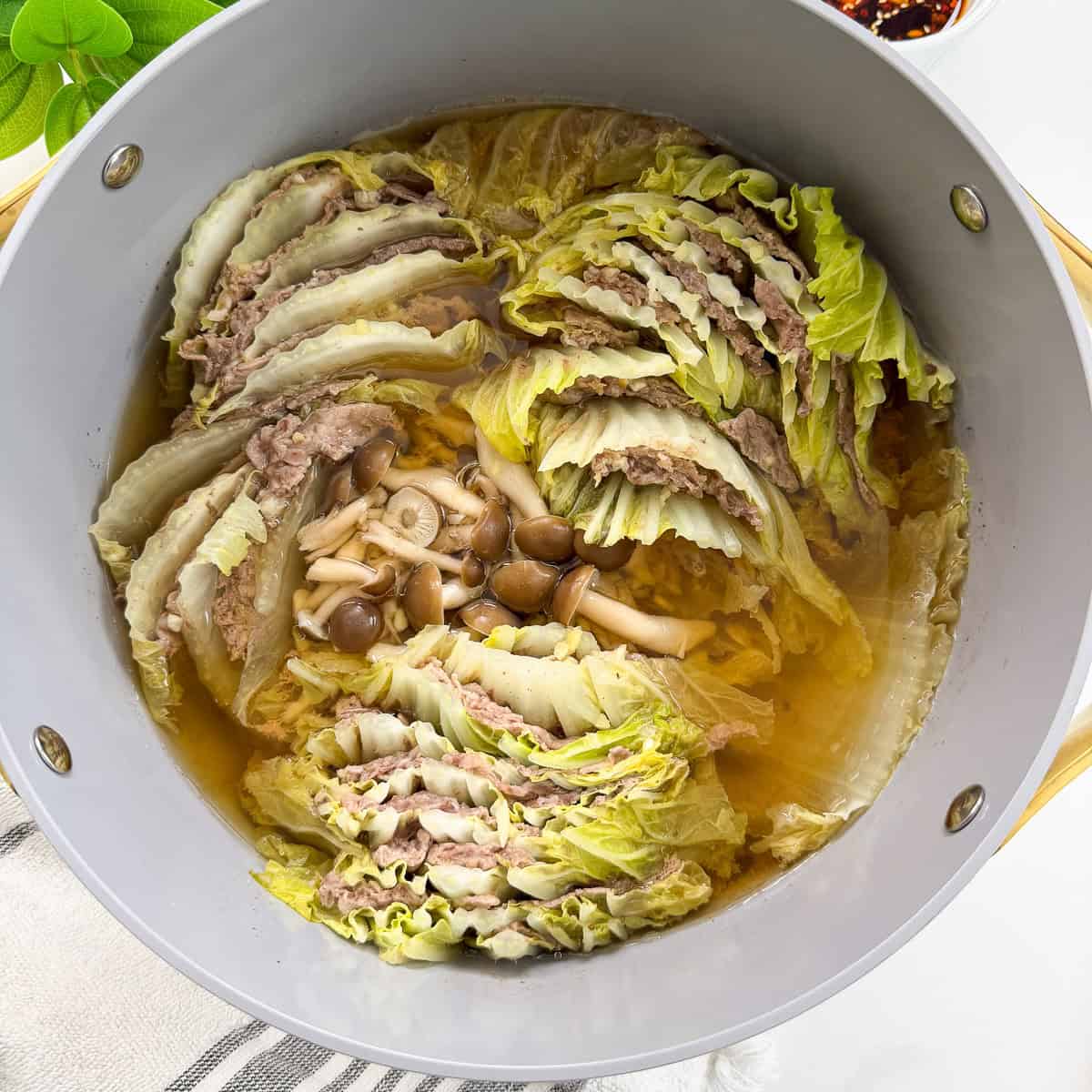
I want everyone to eat more cabbage and Mille-Feuille Nabe, or Japanese hot pot, is the best way to do so. You get loads of napa cabbage, thinly sliced beef or pork, and mushrooms all simmered in an umami-packed dashi broth. It's all cooked in one pot and ready within 30 mins.
Ask AI about this recipe
Want a summary of this recipe? Need to substitute an ingredient? Have an allergy? Ask AI.
Jump to:
What is Mille-Feuille Nabe?
Mille-feuille nabe is a Japanese hot pot where napa cabbage and sliced meat are stacked until you get many layers, then simmered in a light savory broth. The name comes from the French term for a thousand layers, and once you see the pot you will understand why. It is a one pot meal that is warming, easy to customize, and endlessly comforting.
Why You'll Love This Mille-Feuille Nabe
- Looks impressive with almost no work: stacking cabbage and meat takes minutes but comes out beautiful.
- One pot, big payoff: everything simmers together so cleanup is easy and the flavor builds itself.
- Naturally light but satisfying: the broth is savory and warming without feeling heavy.
Ingredients
Main ingredients
- Napa cabbage: Use whole leaves for the classic stacked look of mille-feuille nabe.
- Beef or pork belly: Either works for this dish!
- Shimeji or shiitake mushrooms: Shimeji mushrooms are delicate Japanese mushrooms that add texture and a subtle umami bite.
- Firm tofu: This is optional but adds more protein to the dish.
Broth
- Chicken broth
- Hondashi: Hondashi is a Japanese instant dashi stock powder that gives the broth its savory depth.
- Soy sauce
- Mirin: Mirin is a sweet Japanese rice wine that balances the salty and savory notes in the broth.
- Garlic
- Ginger
- Salt
Dipping sauce
- Ponzu sauce: Ponzu is a citrusy soy based sauce that adds brightness to every bite.
- Soy sauce
- Chili crisp: Chili crisp is a crunchy chili oil condiment that brings heat and texture to the dipping sauce.
Customizations
- Add more vegetables: Enoki mushrooms, bok choy, or thin carrot slices tuck nicely between the cabbage layers.
- Add more protein: you can add more sliced beef/pork or firm tofu to increase the protein.
How to Make Mille-Feuille Nabe
Step 1: Prep the cabbage. Peel 8 to 10 napa cabbage leaves, trim the ends, then rinse and drain them well.
Step 2: Build the stacks. On a cutting board, layer one napa cabbage leaf, top with 3 to 4 slices of beef or pork belly, then another leaf and more meat, repeating until you have 8 to 10 layers. Cut the stack into 4 equal pieces.
Step 3: Arrange the pot. In a large pot, pack the cabbage and meat stacks tightly starting from the outer edges, then fill the center with the mushrooms and optional tofu.
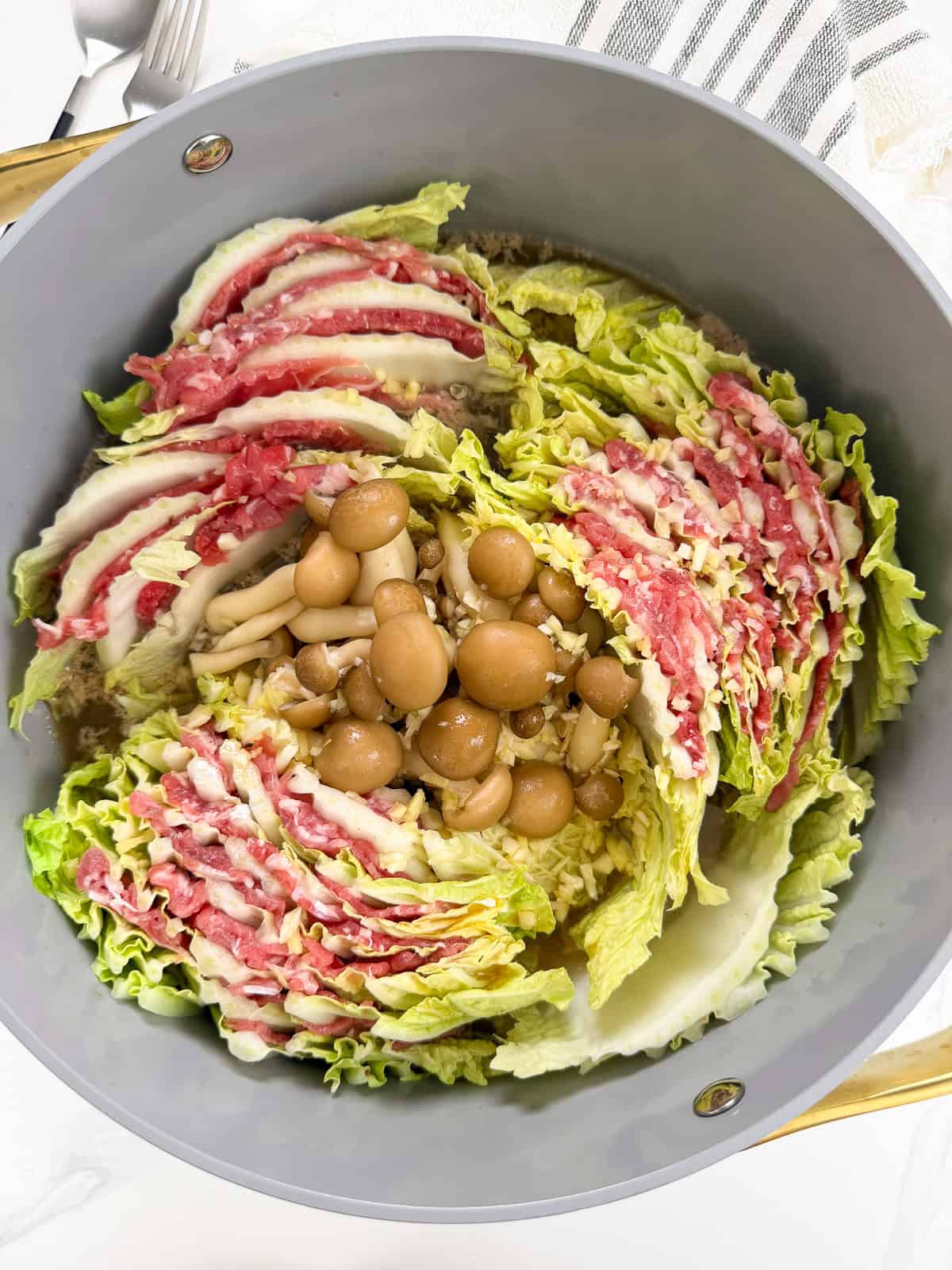
Step 4: Make the broth. In a bowl, whisk together the chicken broth, hondashi, soy sauce, mirin, garlic, ginger, and salt, then pour it into the pot.
Step 5: Simmer everything. Bring the pot to a simmer, reduce the heat to medium low, and cook for 10 to 12 minutes until the cabbage is soft.
Step 6: Mix the dipping sauce. While the hot pot simmers, whisk together the ponzu sauce, soy sauce, and chili crisp in a small bowl.
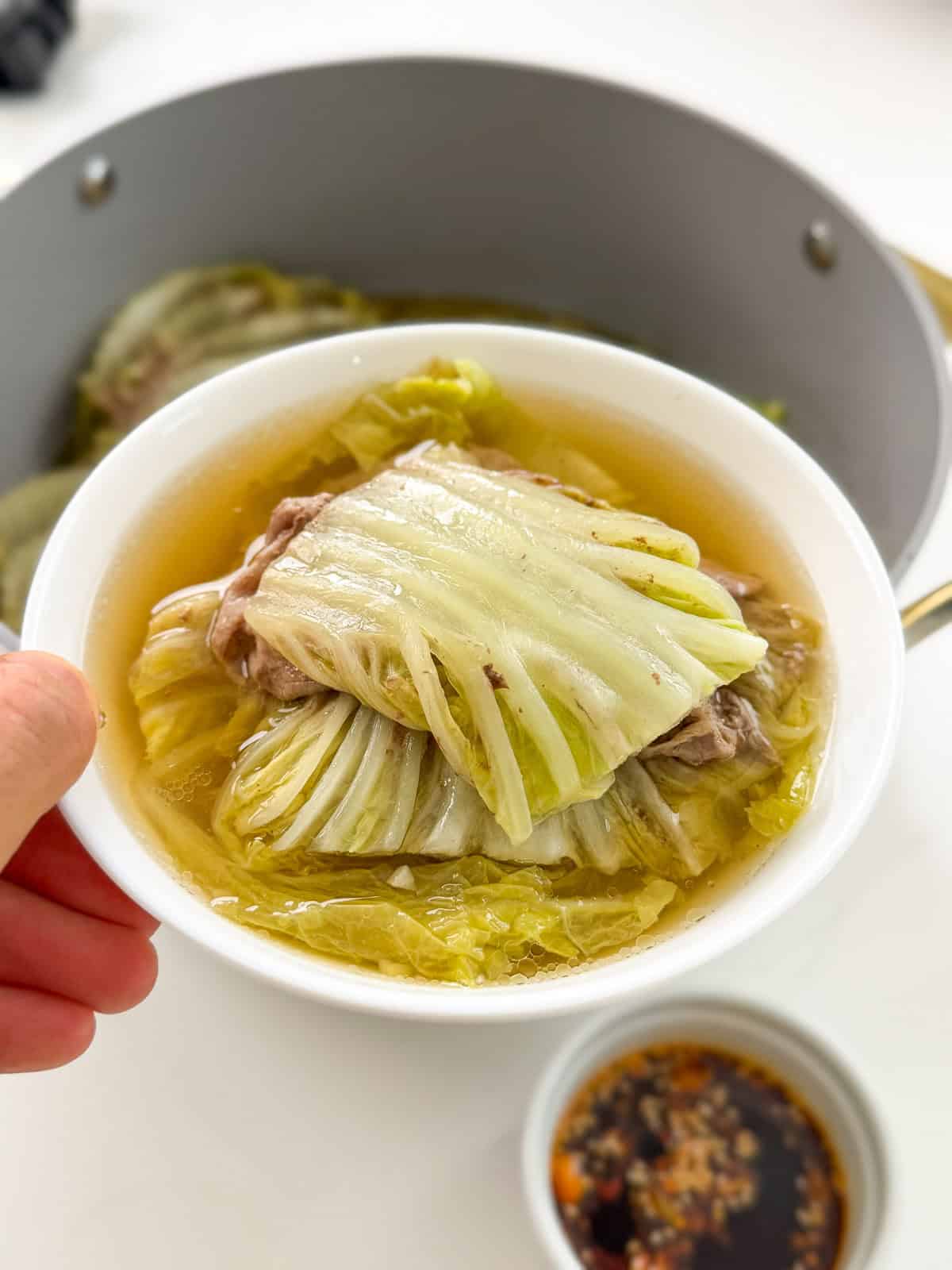
Step 7: Serve. Serve the mille-feuille nabe immediately with the dipping sauce on the side.
Storage
Leftovers keep in the fridge for up to 3 days in an airtight container. Reheat gently on the stovetop over medium low heat so the cabbage does not turn mushy.
Frequently Asked Questions (FAQs)
What does mille-feuille mean?
Mille-feuille is French for a thousand layers, which is exactly what this nabe looks like once it is stacked and sliced.
Can I use a different cabbage?
Napa cabbage is traditional because the leaves are soft and pliable, but savoy cabbage can work too.
Is mille-feuille nabe spicy?
The broth itself is mild and savory. Any heat comes from the chili crisp in the dipping sauce, so you control the spice level.
Can I make this ahead of time?
You can stack the cabbage and meat a few hours ahead and keep it covered in the fridge, then add the broth and simmer right before serving.
What can I serve with mille-feuille nabe?
Steamed rice is the classic pairing, since it soaks up the extra broth beautifully.
Related Recipes You'll Love
- Napa Cabbage Rolls
- Chinese Cabbage Stir-Fry with Garlic
- Dirty Cabbage Recipe
- Red Curry Melting Cabbage
- Marry Me Melting Cabbage
Mille-Feuille Nabe (Japanese Hot Pot)
Ingredients
Main ingredients
- 8-10 leaves napa cabbage
- 1 pound thinly sliced beef or pork belly
- 4 oz shimeji or shiitake mushrooms
- Sliced firm tofu optional
Broth
- 4 cups low-sodium chicken broth
- 1.5 tablespoon instant dashi soup stock (hondashi)
- 2 tablespoon soy sauce
- 1.5 tablespoon mirin
- 3 cloves garlic minced
- 1 tablespoon minced ginger
- ¼ teaspoon salt
Dipping Sauce
- 3 tablespoon ponzu sauce
- 1 tablespoon soy sauce
- 2 teaspoon chili crisp
Instructions
- Peel 8-10 napa cabbage leaves, trim the ends off, then rinse and drain.8-10 leaves napa cabbage
- On a cutting board, stack one napa cabbage leaf, top with 3-4 slices of thinly sliced beef or pork belly, then another leaf and more meat, repeating until you have 8-10 layers, then cut the stack into 4 equal pieces.1 pound thinly sliced beef or pork belly
- In a large pot, pack the cabbage and meat stacks tightly starting from the outer edges, then add the shimeji or shiitake mushrooms in the center along with optional sliced firm tofu.4 oz shimeji or shiitake mushrooms, Sliced firm tofu
- In a bowl, whisk together the chicken broth, hondashi, soy sauce, mirin, garlic, ginger, and salt, then pour the mixture into the pot.4 cups low-sodium chicken broth, 1.5 Tbsp instant dashi soup stock, 2 Tbsp soy sauce, 1.5 Tbsp mirin, 3 cloves garlic, 1 Tbsp minced ginger, ¼ tsp salt
- Bring the pot to a simmer, reduce the heat to medium-low, and simmer for 10-12 minutes until the cabbage is soft.
- While the hot pot is cooking, in a small bowl, whisk together the ponzu sauce, soy sauce, and chili crisp to make the dipping sauce.3 Tbsp ponzu sauce, 1 Tbsp soy sauce, 2 tsp chili crisp
- Once done, serve hotpot immediately with the dipping sauce.
Notes
- Slice thin, stack tight: Thin meat and tightly packed layers keep the mille-feuille nabe from falling apart when you serve it. If you have a bigger pot, you can create multiple bundles to make it fit in a pot.
- Do not overfill the pot: Leave a little room at the top so the broth can simmer without boiling over.
- Taste before serving: Give the broth a quick taste before plating and adjust with a splash more soy sauce if it needs it.