
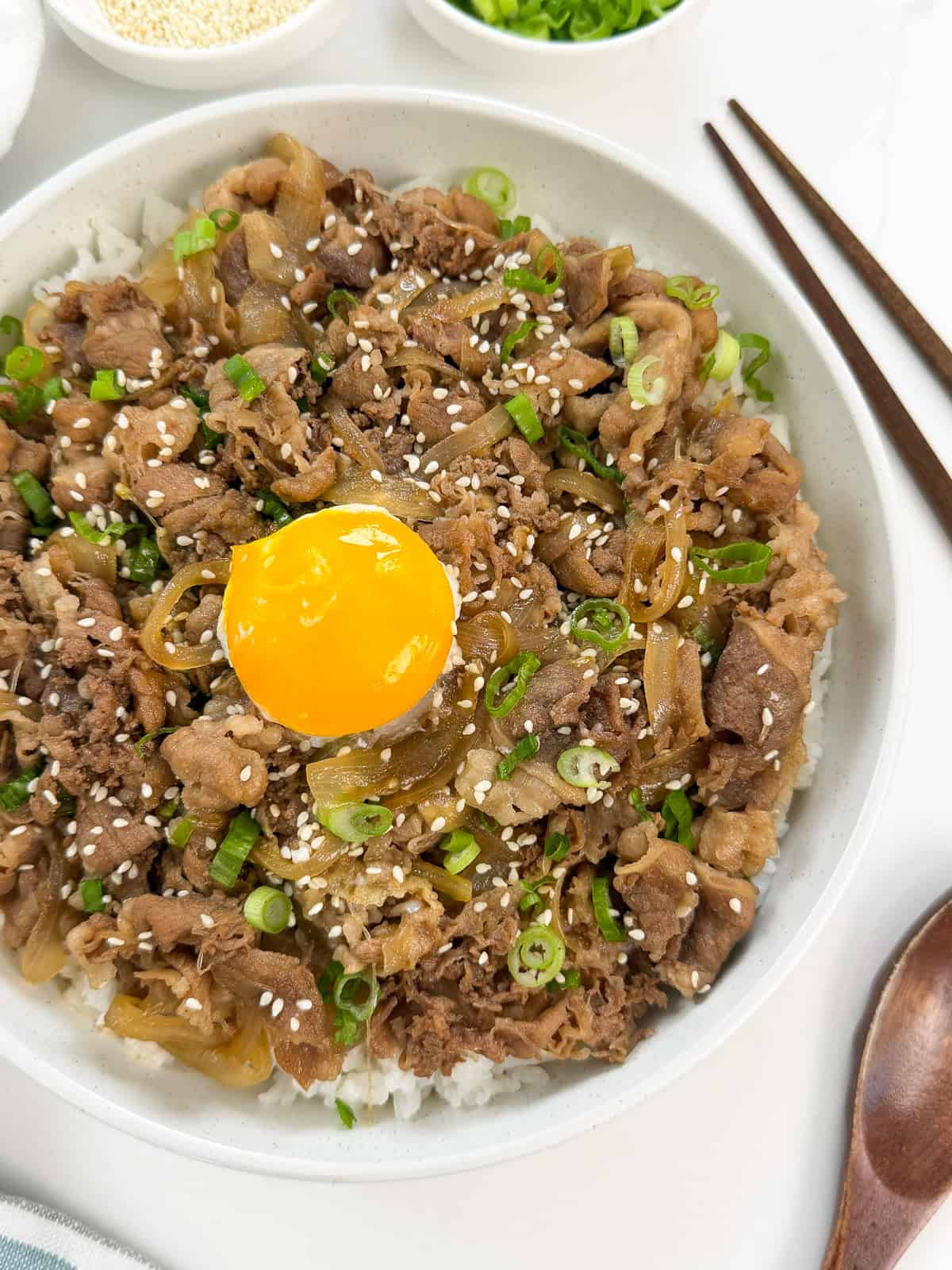
Gyudon (Japanese beef rice bowl) is one of those meals whenever I want something quick but still restaurant-quality on a busy weeknight. All you need is one skillet, 15 minutes, and you're eating like you just left a Tokyo beef bowl shop.
Jump to:
- What Is Gyudon (Japanese Beef Rice Bowl)?
- Why You'll Love Gyudon (Japanese Beef Rice Bowl)
- Equipment
- Ingredients
- Customizations
- How to Make Gyudon (Japanese Beef Rice Bowl)
- Storage
- Tips to Make the Perfect Gyudon (Japanese Beef Rice Bowl)
- Frequently Asked Questions (FAQs)
- Related Recipes
- Gyudon (Japanese Beef Rice Bowl)
What Is Gyudon (Japanese Beef Rice Bowl)?
Gyudon literally translates to "beef bowl," and it's one of Japan's most beloved comfort foods. Thinly sliced beef and onions get simmered in a sweet and savory dashi based broth, then ladled over steamed white rice so the rice soaks up all that goodness. It's fast food in Japan (think Yoshinoya) but I think the homemade version tastes even better and takes barely any effort.
Why You'll Love Gyudon (Japanese Beef Rice Bowl)
- One skillet, 15 minutes: The beef and onions simmer directly in the sauce, so there's no marinating, no searing in batches, and barely any cleanup.
- Sweet, savory, umami packed broth: Dashi, soy sauce, mirin, and sake create that signature Japanese beef bowl flavor that gets absorbed into every grain of rice.
- Cheap ingredients, bougie results: A pound of beef and one onion feed the whole table, and it tastes like you ordered takeout from your favorite spot.
Equipment
- Large Skillet with Lid
- Large Measuring Cup
- Knife and Cutting Board
Ingredients
Main Ingredients
- Water
- Instant Dashi Soup Stock: Also known as hondashi, this is the umami backbone of the broth and dissolves right into the liquid. Perfect for an easy, quick meal like this one.
- Sake: A Japanese rice wine that adds depth and helps tenderize the beef, but shaoxing wine, dry sherry, or equal parts water and rice vinegar (for non-alcoholic version) work too.
- Mirin: A sweet Japanese rice wine that gives the broth its signature glossy sweetness.
- Soy Sauce
- Granulated Sugar
- Sesame Oil
- Yellow Onion
- Thinly Sliced Beef: Look for shabu shabu or hot pot style ribeye or chuck at your local Asian market, sliced really thin so it cooks in minutes.
For Serving
- Green Onions
- Poached Egg
- White Rice
Customizations
- Make it spicy: Add a spoonful of chili crisp or a sprinkle of shichimi togarashi on top for some heat.
- Swap the egg: Not into poached? A soft jammy egg or an onsen style egg works beautifully, or skip it entirely.
- Add veggies: Toss in sliced shiitake mushrooms or spinach with the onions for a more loaded bowl.
How to Make Gyudon (Japanese Beef Rice Bowl)
Mix the Broth
Combine the water, dashi powder, sake, mirin, soy sauce, sugar, and sesame oil in a large cup and set aside.
Soften the Onions
In a large skillet, add the sliced onion and saute for about 1 minute just to soften it up. Pour in the broth mixture and simmer, covered, for 1-2 minutes.
Simmer the Beef
Add the beef and simmer uncovered for 3-4 minutes, until the beef is cooked through and the onions are tender. Don't overcook it, thin beef goes from silky to chewy fast.
Assemble and Serve
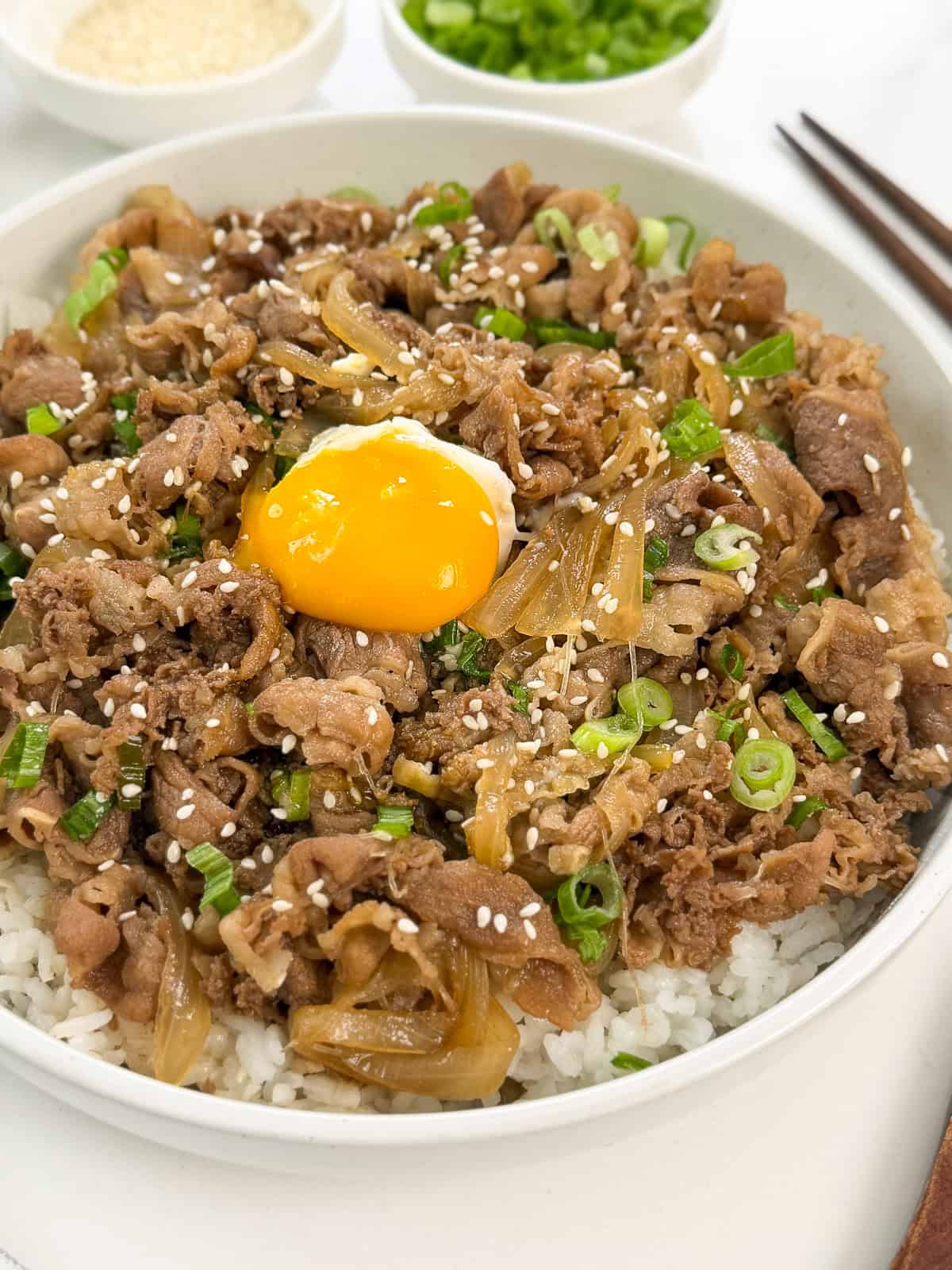
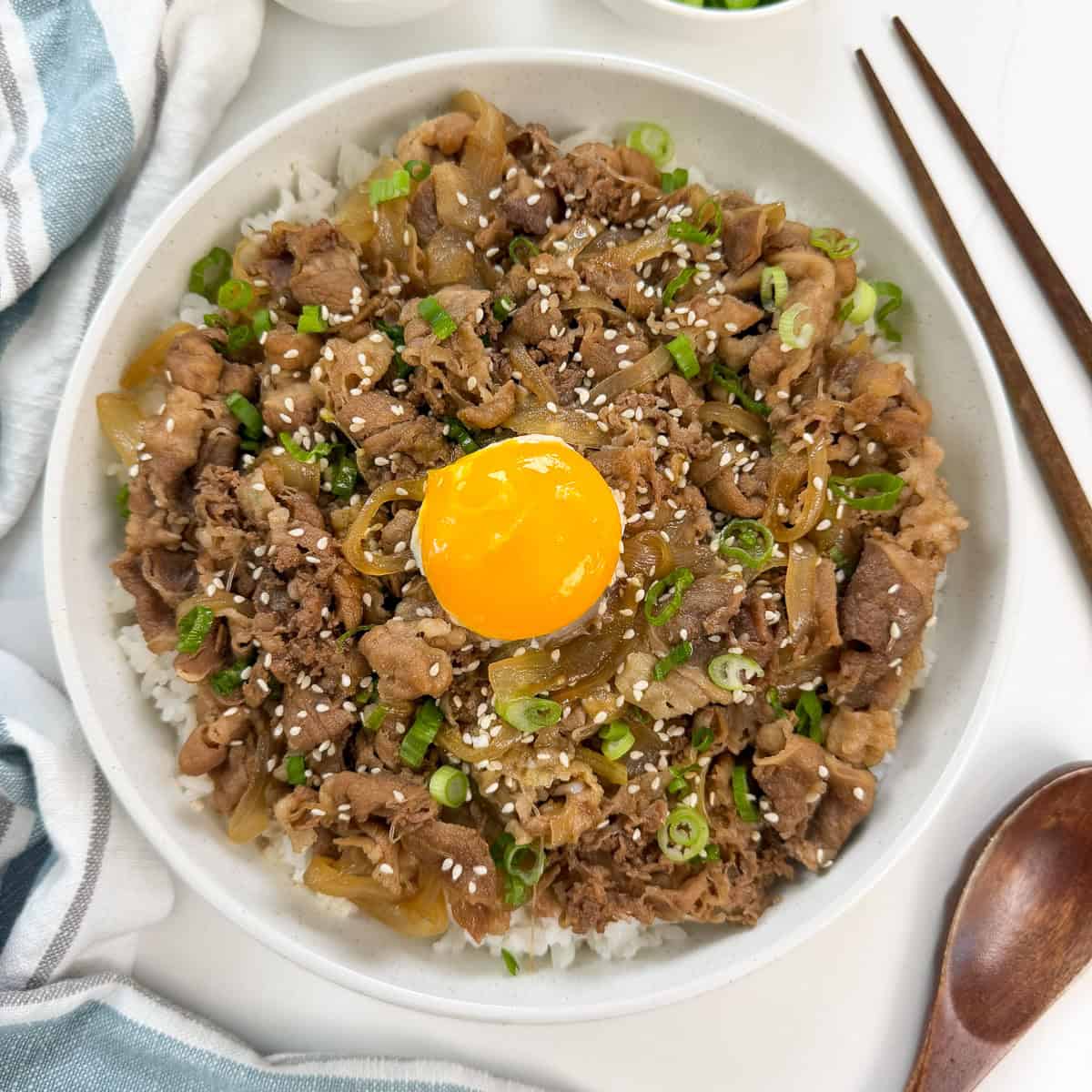
Garnish with chopped green onions and a poached egg, then serve over a bed of white rice. Spoon extra broth over the top because that soaked rice is the best part.
Storage
Store the beef and onion mixture in an airtight container in the fridge for up to 3 days and reheat gently on the stove or in the microwave. It also freezes well for up to 2 months, just store it separately from the rice.
Tips to Make the Perfect Gyudon (Japanese Beef Rice Bowl)
- Buy the beef pre sliced: Asian markets sell paper thin shabu shabu beef in the freezer section, and it's a total game changer for this recipe.
- Don't skip the dashi: It's the key ingredient for the savory and sweet broth.
- Simmer, never boil: A gentle simmer keeps the beef tender, while a hard boil turns it tough and makes the broth cloudy.
Frequently Asked Questions (FAQs)
What kind of beef is best for gyudon (Japanese beef rice bowl)?
Thinly sliced ribeye or chuck is the classic choice. Look for shabu shabu or hot pot beef at Asian grocery stores, or freeze a steak for 30 minutes and slice it as thin as you can at home.
Can I make gyudon (Japanese beef rice bowl) without sake or mirin?
Yes! Swap the sake for shaoxing wine, dry sherry, or equal parts water and rice vinegar (for a non-alcoholic version). For mirin, use a splash of rice vinegar plus a little extra sugar to mimic that sweet tang.
What is dashi powder and where do I find it?
Dashi powder, often sold as hondashi, is an instant Japanese soup stock made from dried bonito flakes. You'll find it at any Asian market or online.
Is gyudon supposed to have a raw egg on top?
In Japan, gyudon is often topped with a raw or onsen egg. Use whatever style you love.
Related Recipes
- Oyakodon (Japanese Chicken and Egg Rice Bowl)
- Beef Udon Soup (Niku Udon)
- Beef Yaki Udon Stir-Fry
- Benihana Fried Rice
- Teriyaki Chicken
Gyudon (Japanese Beef Rice Bowl)
Video
Equipment
Ingredients
Main Ingredients
- 1 cup water
- 1.5 tablespoon instant dashi soup stock see recipe notes for homemade dashi
- 3 tablespoon sake or shaoxing wine, dry sherry, or 1:1 ratio water + rice vinegar
- ¼ cup mirin
- 6 tablespoon soy sauce
- 2 tablespoon granulated sugar
- 1 teaspoon sesame oil
- 1 yellow onion thinly sliced
- 1 pound thinly sliced beef
For Serving
- Chopped green onions
- Poached egg
- White rice
Instructions
- Combine the water, dashi powder, sake, mirin, soy sauce, sugar, and sesame oil in a large cup and set aside.1 cup water, 1.5 Tbsp instant dashi soup stock, 3 Tbsp sake, ¼ cup mirin, 6 Tbsp soy sauce, 2 Tbsp granulated sugar, 1 tsp sesame oil
- In a large skillet, add the sliced onion and saute for about 1 minute just to soften it up. Pour in the broth mixture and simmer, covered, for 1-2 minutes.1 yellow onion
- Add the beef and simmer uncovered for 3-4 minutes, until the beef is cooked through and the onions are tender.1 pound thinly sliced beef
- Garnish with chopped green onions and a poached egg, then serve over a bed of white rice.Chopped green onions, Poached egg, White rice
Notes
- 4 cups water
- 0.5 oz (15g) kombu (dried kelp)
- 0.5 oz (15g) dried bonito flakes
- In a medium pot, bring the water to a boil, cut the kombu into 2-3 inch pieces, add to the water, and simmer for 10 minutes.
- Turn off the heat, add the dried bonito flakes, gently stir, and let sit for 10 minutes.
- Strain the liquid and discard the solids.

Priscilla says
I used shaved wagyu so I didn't have to cut any meat making it so easy to do. So delicious! Brings back memories from my time in Japan ❤️
Herman says
shaved wagyu is even better, glad you loved it!
Kate says
Very good and easy, especially with a 4-1/2 yo running around the kitchen wanting to help.
Herman says
It's a fun family activity to do, thanks for the review!
Raquel says
Delicious and easy! Tasted just like the restaurant recipe. I had to find dashi in the H mart but shaved beef was accessible at my local acme. I would recommend low sodium soy as it was a bit on the salty side for me. But overall it was a 10/10
Herman says
yes feel free to adjust the soy sauce down a little too if you think it's too salty but for me it was okay, Thank you!
Mac says
The dashi stock mentioned l, do you add powder directly or do you make the stock first and then add?
Herman says
I use the dashi instant powder to make the stock! I make that first then simmer the beef in the stock
Laura says
Very tasty