There's a shop in LA that is serving this viral mango sticky rice ube mochi with a creamy coconut sauce so I had to make it myself. I am a mango sticky rice and mochi addict so why not combine the two to make the best dessert ever?
Jump to:
- What Is Mango Sticky Rice Ube Mochi?
- Why You'll Love Mango Sticky Rice Ube Mochi
- Equipment You'll Need
- Ingredients
- Customizations
- How to Make Mango Sticky Rice Ube Mochi
- Storage
- Tips to Make the Perfect Mango Sticky Rice Ube Mochi
- Frequently Asked Questions (FAQs)
- Related Recipes You'll Love
- Mango Sticky Rice Ube Mochi
What Is Mango Sticky Rice Ube Mochi?
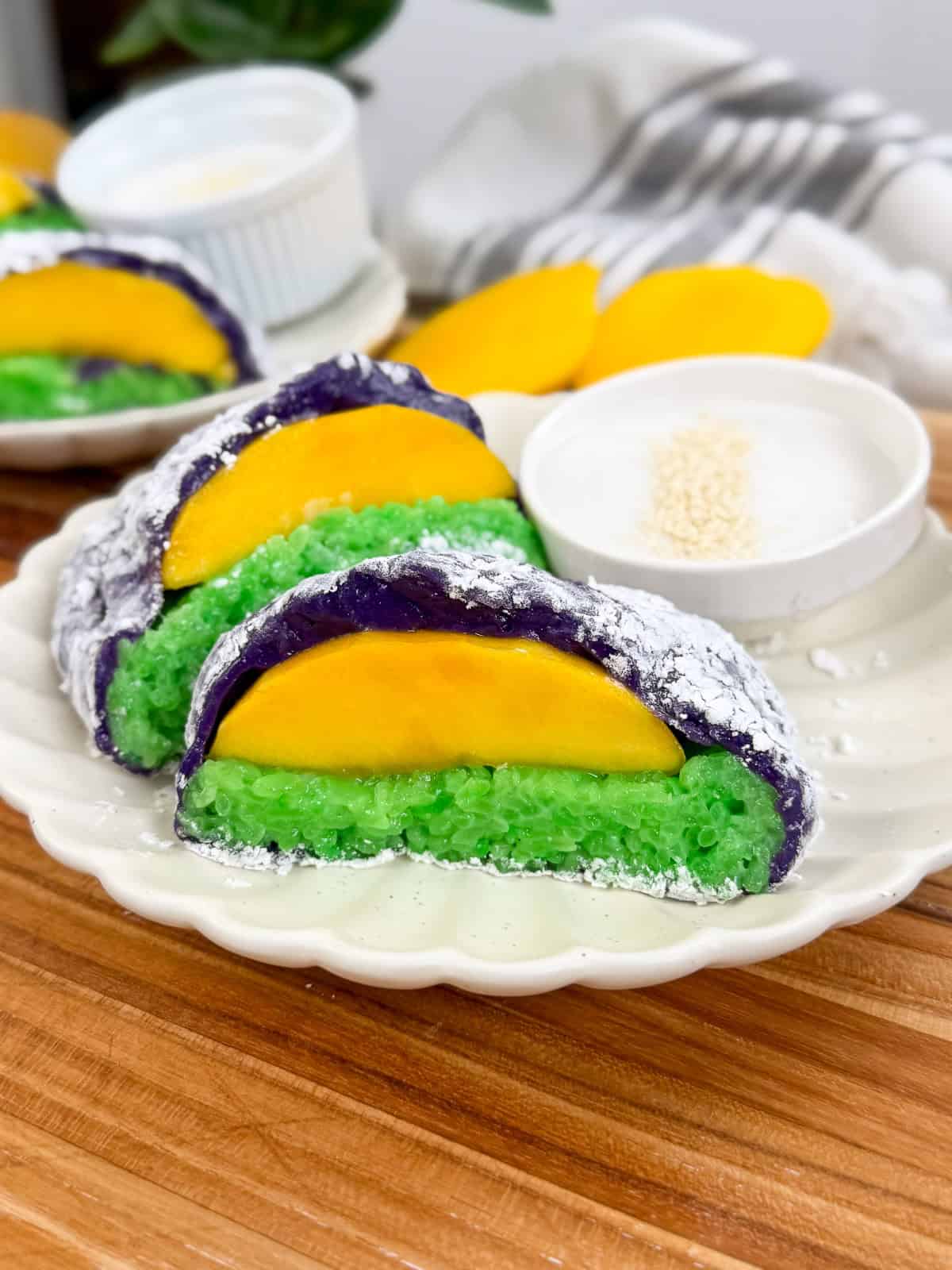
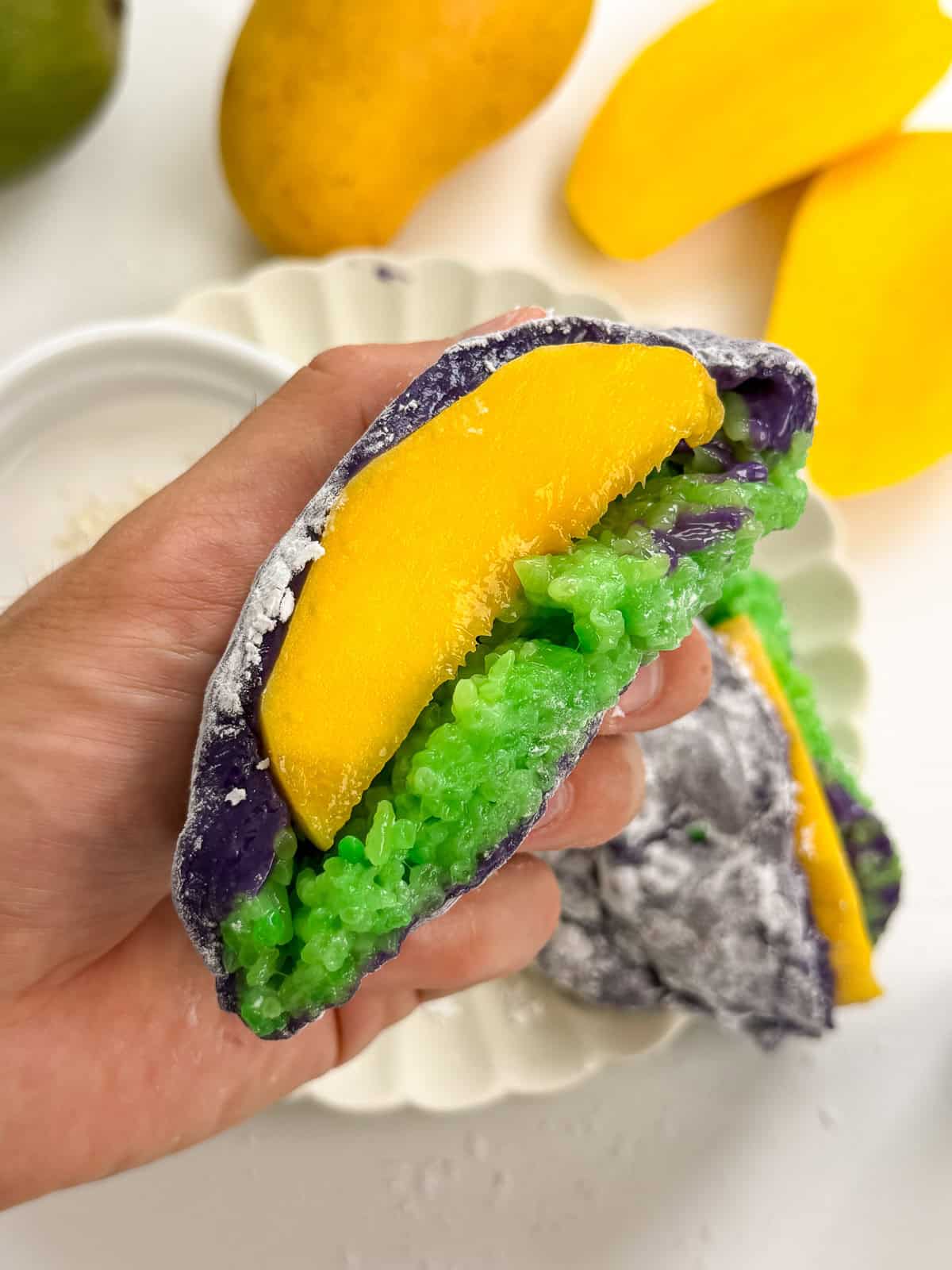
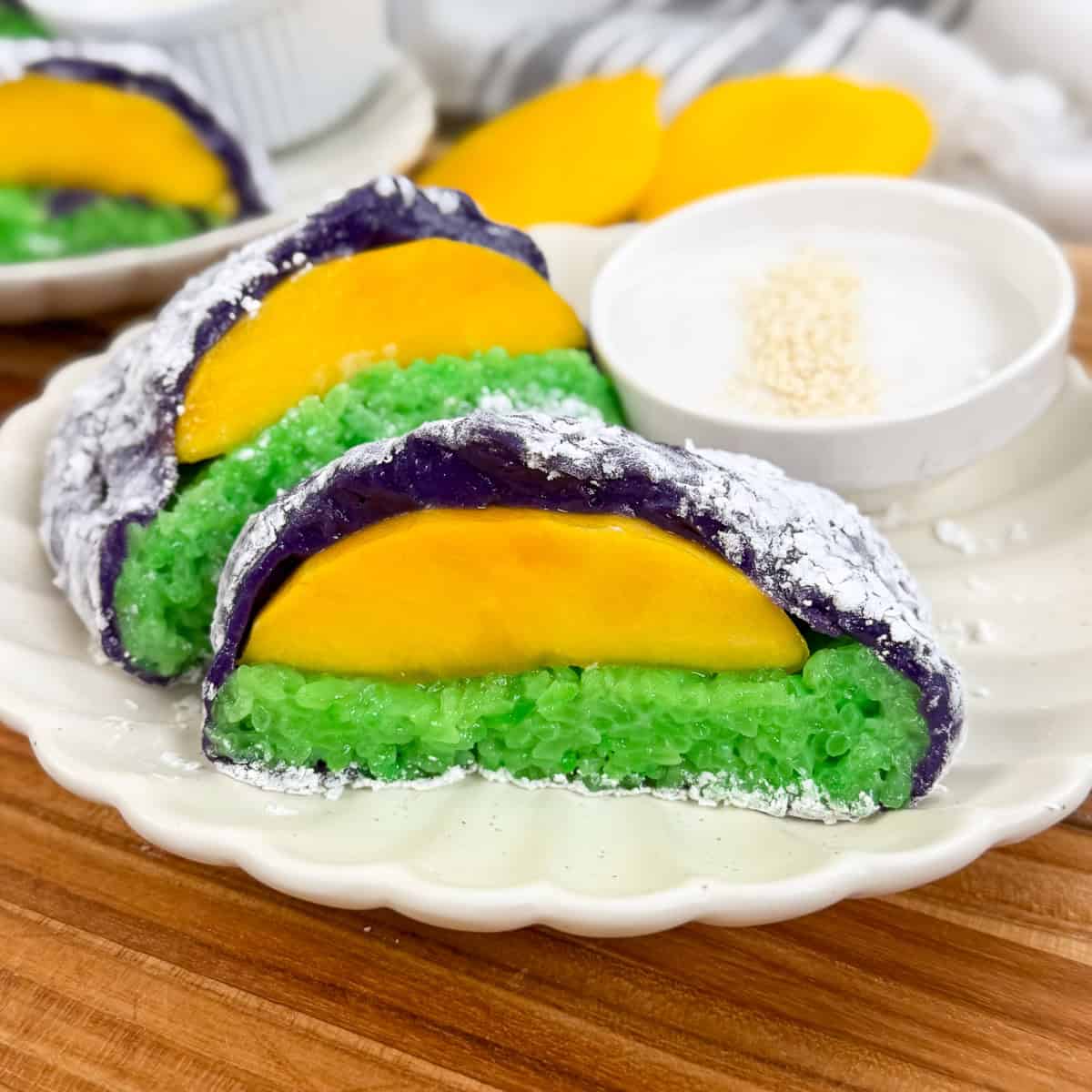
Mango sticky rice ube mochi takes the classic Thai dessert of coconut sticky rice and fresh mango and tucks it inside soft, chewy ube flavored mochi. It's a fun handheld twist on the traditional plated version, combining Filipino ube flavor with a Southeast Asian dessert favorite.
Why You'll Love Mango Sticky Rice Ube Mochi
- Two Desserts in One: You get the best parts of mango sticky rice and mochi in a single bite.
- Make Ahead Friendly: The components can be prepped separately and assembled when you are ready to serve.
- Show Stopping Color: That purple ube shell with pops of yellow mango and green pandan sticky rice looks incredible on a dessert table.
Equipment You'll Need
- Rice Cooker
- Microwave Safe Bowl
- Whisk
- Small Pot
- Rolling Pin
- Plastic Wrap or Parchment Paper
- Silicone Spatula
- Pastry Brush
Ingredients
Mango Pandan Sticky Rice
- Sweet Rice: Also called glutinous rice, this is what gives sticky rice its signature chewy texture.
- Water
- Pandan Extract: A fragrant, slightly vanilla like flavoring common in Southeast Asian desserts.
- Pandan Leaves: This is optional but the fresh leaves adds even more pandan aroma while the rice cooks.
- Full Fat Coconut Milk
- Sugar
- Salt
- Cornstarch
- Warm Water
- Mango
Ube Mochi
- Glutinous Rice Flour: The sticky rice flour that gives mochi its signature chewy, bouncy bite.
- Sugar
- Corn Starch
- Milk
- Neutral Oil
- Ube Extract: A purple yam flavoring that gives the mochi its color and subtle sweet, nutty taste.
- Corn Starch, for Dusting
Customizations
- Boost the Ube Flavor: Add an extra drop or two of ube extract for a deeper purple color and stronger ube flavor.
- Make It Extra Fancy: Sprinkle toasted sesame seeds or crushed peanuts on top before serving for some crunch.
How to Make Mango Sticky Rice Ube Mochi
Cook the Pandan Sticky Rice
Rinse the sweet rice under cold water until it runs clear, then drain completely. Add it to the rice cooker with the water, pandan extract and pandan leaves if using, and give it a quick stir so the extract is evenly diffused.
Cook on the normal or sweet rice setting, then crack the lid and let the rice cool until just slightly warm.
Make the Ube Mochi Dough
In a microwave safe bowl, whisk together the glutinous rice flour, sugar, corn starch, milk, oil and ube extract. Cover with a damp paper towel and microwave for 2-3 minutes, stirring every minute or so, until it turns into a thick, bouncy dough.
Let it cool to room temperature.
Simmer the Coconut Sauce
In a small pot, combine the coconut milk, sugar and salt. Cook over medium low heat, stirring constantly, until the sugar and salt dissolve, but don't let it come to a boil.
Turn off the heat and set aside ½ cup of the coconut sauce. Stir the cornstarch slurry into the remaining sauce and cook over low heat, stirring constantly, until it thickens slightly.
Assemble the Mango Sticky Rice Ube Mochi
Once the rice has cooled, pour the ½ cup coconut sauce over it and mix well so the rice soaks it up. Let it sit for about 10 minutes to absorb.
Turn the mochi dough out onto plastic wrap or parchment and shape into a ball, then cut it in half with a plastic spatula. Top with another sheet of plastic wrap or parchment and roll each half into a thin layer with a rolling pin.
Add a portion of the pandan sticky rice and one or two mango pieces to a flattened piece of mochi, then fold the mochi over until it is sealed shut. Dust with corn starch, brushing off any excess so it is evenly coated.
Serve with the remaining coconut sauce on the side.
Storage
Mango sticky rice ube mochi is best eaten fresh since the mochi shell firms up in the fridge.
If you do have leftovers, store them in an airtight container in the fridge for up to a day and let them sit at room temperature for a few minutes before eating.
Tips to Make the Perfect Mango Sticky Rice Ube Mochi
- Don't Skip the Cooldown: Hot rice or hot mochi dough will make the wrapping process a sticky mess, so give both time to cool.
- Use Parchment Paper or Plastic Wrap: I find that using these helps ensure the mochi doesn't stick everywhere and makes it easier to seal.
- Watch the Microwave Time: Every microwave runs a little different, so stir your mochi dough every minute or so to ensure it doesn't overcook and turn rubbery.
Frequently Asked Questions (FAQs)
What does ube taste like in mango sticky rice ube mochi?
Ube has a mild, sweet and slightly nutty flavor, kind of like a cross between vanilla and taro. It pairs really well with the tropical sweetness of the mango and coconut.
Can I make mango sticky rice ube mochi ahead of time?
Yes, you can cook the sticky rice and make the coconut sauce ahead of time. I recommend making the mochi dough the day you eat it so it doesn't get tough.
Where can I find ube extract and pandan extract?
Both are usually found at Asian grocery stores in the baking aisle or you can easily order them online. Links are provided in the recipe card below.
Can I use frozen mango instead of fresh?
Fresh mango is best for this recipe!
Related Recipes You'll Love
- Mango Sago
- Mango Pudding (Hong Kong Style)
- Mango Sticky Rice Summer Rolls
- Taro Sago
- Taho (Filipino Silken Tofu Dessert)
Mango Sticky Rice Ube Mochi
Ingredients
Mango Pandan Sticky Rice
- 1 cup sweet rice
- 1.25 cups water
- 2 drops pandan extract
- Small bundle pandan leaves optional
- 1.5 cups full-fat coconut milk 1 can
- ⅓ cup granulated sugar
- ½ teaspoon salt
- 2 teaspoon cornstarch + 2 tablespoon warm water
- 1 large mango or 2 medium yellow mangos, sides cut
Ube Mochi
- 1 cup glutinous rice flour
- 2 tablespoon granulated sugar
- 1 tablespoon cornstarch
- ⅔ cup milk
- 1 tablespoon neutral oil
- 2-3 drops (about ⅛ tsp) ube extract
- cornstarch for dusting
Instructions
- Rinse the sweet rice under cold water until it runs clear, drain water completely, then add it to the rice cooker with the water, pandan extract, and optional pandan leaves. Give it a quick stir to ensure panda extract is diffused evenly. Turn on the rice cooker using either “normal” or “sweet rice” setting and once it's done, crack the lid and let the rice cool down until slightly warm.1 cup sweet rice, 1.25 cups water, 2 drops pandan extract, Small bundle pandan leaves
- In a microwave safe bowl, whisk together the glutinous rice flour, sugar, corn starch, milk, oil and ube extract. Cover with a damp paper towel and microwave for 2-3 minutes, stirring every minute or so, until it turns into a thick, bouncy dough. Let it cool to room temperature.1 cup glutinous rice flour, 2 Tbsp granulated sugar, 1 Tbsp cornstarch, ⅔ cup milk, 1 Tbsp neutral oil, 2-3 drops (about ⅛ tsp) ube extract
- In a medium pot, combine the coconut milk, sugar and salt. Cook over medium low heat, stirring constantly, until the sugar and salt dissolve but don't let it reach a boil. Turn off the heat and set aside ½ cup of the coconut sauce. Stir the cornstarch slurry into the remaining sauce and cook over low heat, stirring constantly, until it thickens slightly.1.5 cups full-fat coconut milk, ⅓ cup granulated sugar, ½ tsp salt, 2 tsp cornstarch
- Once the rice has cooled down, pour the reserved ½ cup of coconut sauce over it. Mix well so the rice soaks it up then let it sit for about 10 minutes to absorb.
- Turn the mochi out onto plastic wrap or parchment paper and shape into a ball. Cut it in half with a plastic spatula, then top with another sheet of plastic wrap or parchment and roll each half into a thin layer with a rolling pin.
- With a piece of flattened ube mochi, add a portion of the pandan sticky rice and 1-2 mango pieces, then fold the mochi over until it's sealed shut. Dust the mochi with corn starch, brushing off any excess so it's evenly coated on both sides.1 large mango, cornstarch
- Serve with the remaining coconut sauce on the side.